Creating a shared language, component foundation, and contribution model for a family of civic technology products after acquisition.
MY SCOPEPRODUCT RESEARCH + DESIGN DIRECTOR / DESIGN-SYSTEM STRATEGYTEAMPRODUCT RESEARCH + DESIGN, KATHY WOLF’S CORPORATE UX TEAM, TYLER COMPONENTS WEB ENGINEERING + DIVISION PRODUCT TEAMSTIMEFRAME2019—2022
01 / THE PROBLEM
After Tyler acquired Socrata, the combined organization did not lack interface patterns—it had many overlapping systems, libraries, conventions, and technical stacks. The earlier snuDOT work had already exposed the practical cost: a fictional transportation department was used to connect ingress, visualization, performance measures, alerts, automation, and administration into one customer story, but the journey crossed too many product boundaries. Forge needed to make coherence scalable without asking every product or domain to become identical.
EARLY COHERENCE TESTsnuDOT / FICTIONAL TRANSPORTATION DEPARTMENT
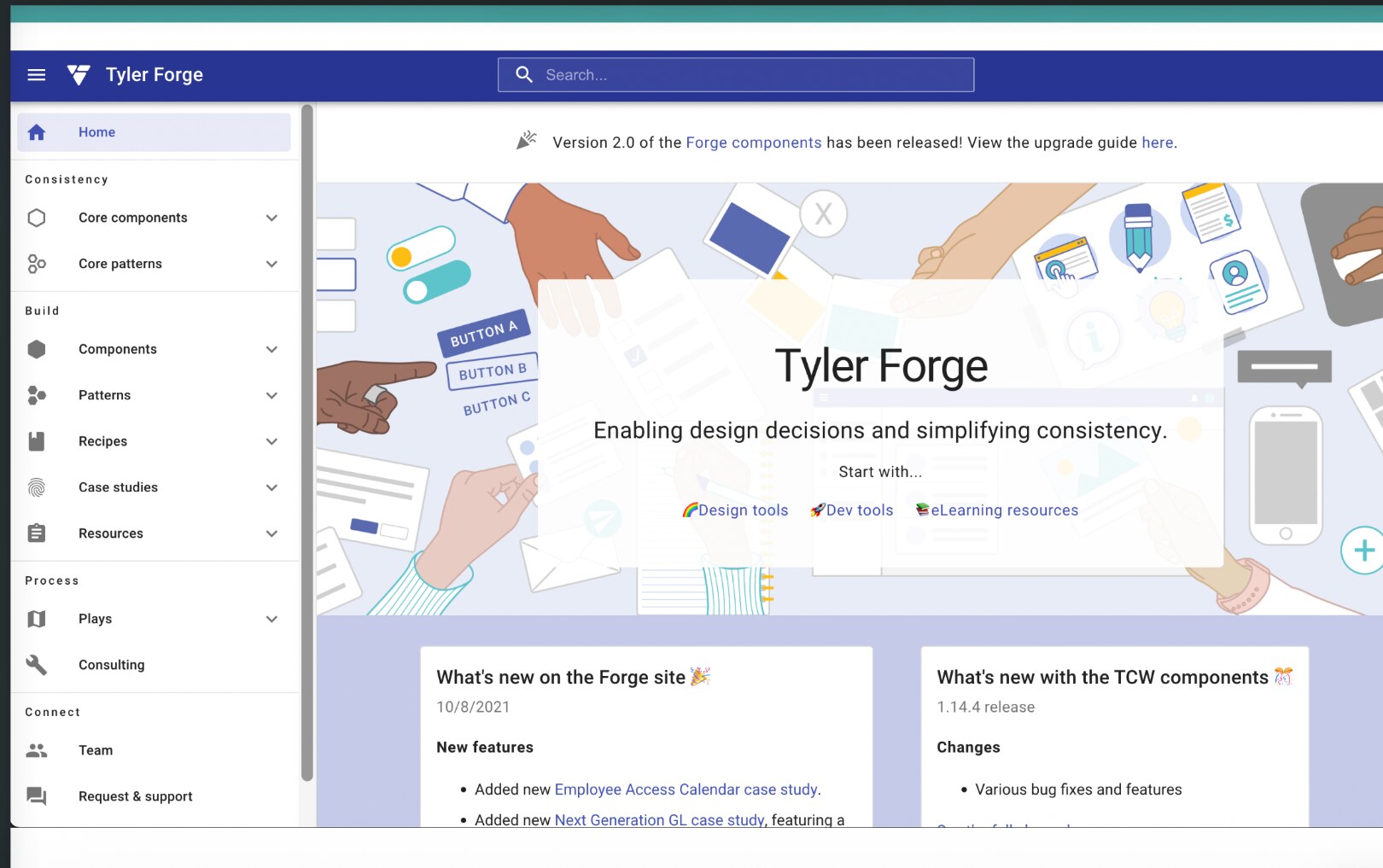
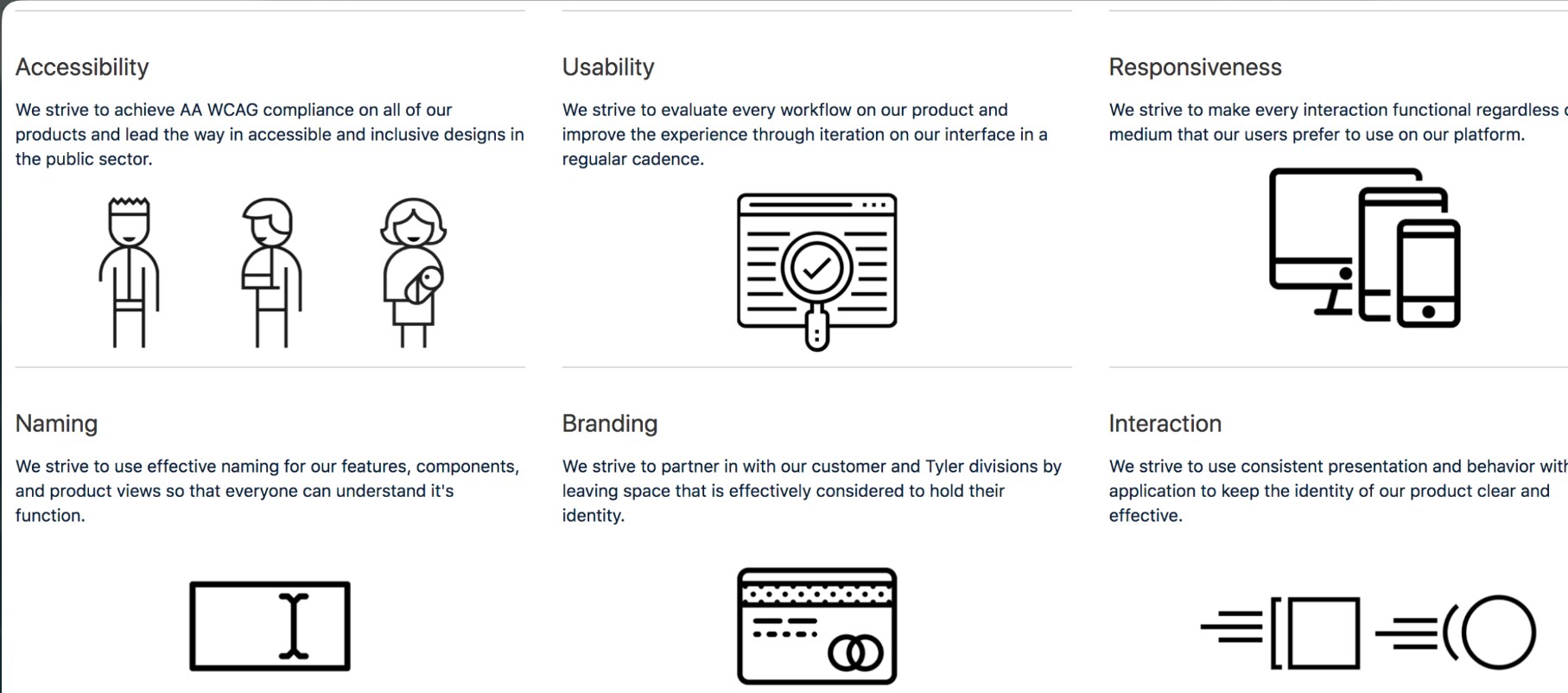
We compared Socrata’s design system, Tyler Components Web, Sketch libraries, and patterns already embedded across products, then studied leading enterprise and public-sector systems. The Forge landing page made the emerging answer tangible: one shared home with useful principles, visual documentation, visible component status, accessibility at the core, and clear starting points for designers, developers, and teams adopting the system.
FORGE LANDING PAGE / ONE SHARED HOME, MULTIPLE WAYS IN03 / THE DECISION
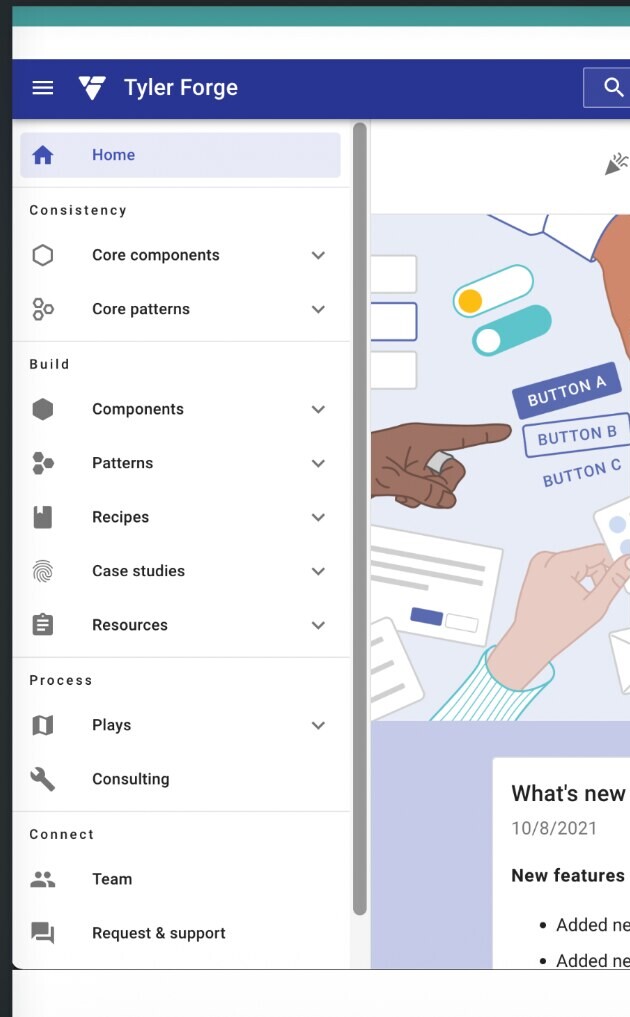
Treat Forge as a shared language rather than a static catalog. Its navigation organized the system by the work people came to do: Consistency for core components and patterns; Build for implementation guidance, recipes, cases, and resources; Process for plays and consulting; and Connect for the team, requests, and support. Underneath it, framework-agnostic web components could serve Angular, Vue, React, or independent products while a request-and-triage process let the system grow from real work.
NAVIGATION MODEL / CONSISTENCY → BUILD → PROCESS → CONNECT04 / THE COLLABORATION
My Product Research + Design team partnered with Kathy Wolf’s Corporate UX team and designers across Tyler divisions to research the opportunity, compare existing systems, frame the MVP, and convene the cross-division UX Summit and working session in Plano. Design, engineering, brand, marketing, and product perspectives met in the same room: demos made existing assets visible, collective exercises shaped the information architecture, and product teams became contributors rather than downstream recipients.
CROSS-DIVISION PARTNERSHIP
PRODUCT RESEARCH + DESIGN↔KATHY WOLF’S CORPORATE UX TEAM
UX SUMMIT + PLANO WORKING SESSION
05 / THE OUTCOME
The work established Forge as a named, shared direction and connected it to design standards, a centralized component implementation, documentation site, release process, accessibility expectations, and a proposed Jira contribution workflow. Divisions gained a practical path toward coherence: adopt the standards that create value, contribute what is missing, and evolve the system through use rather than waiting for a finished library.
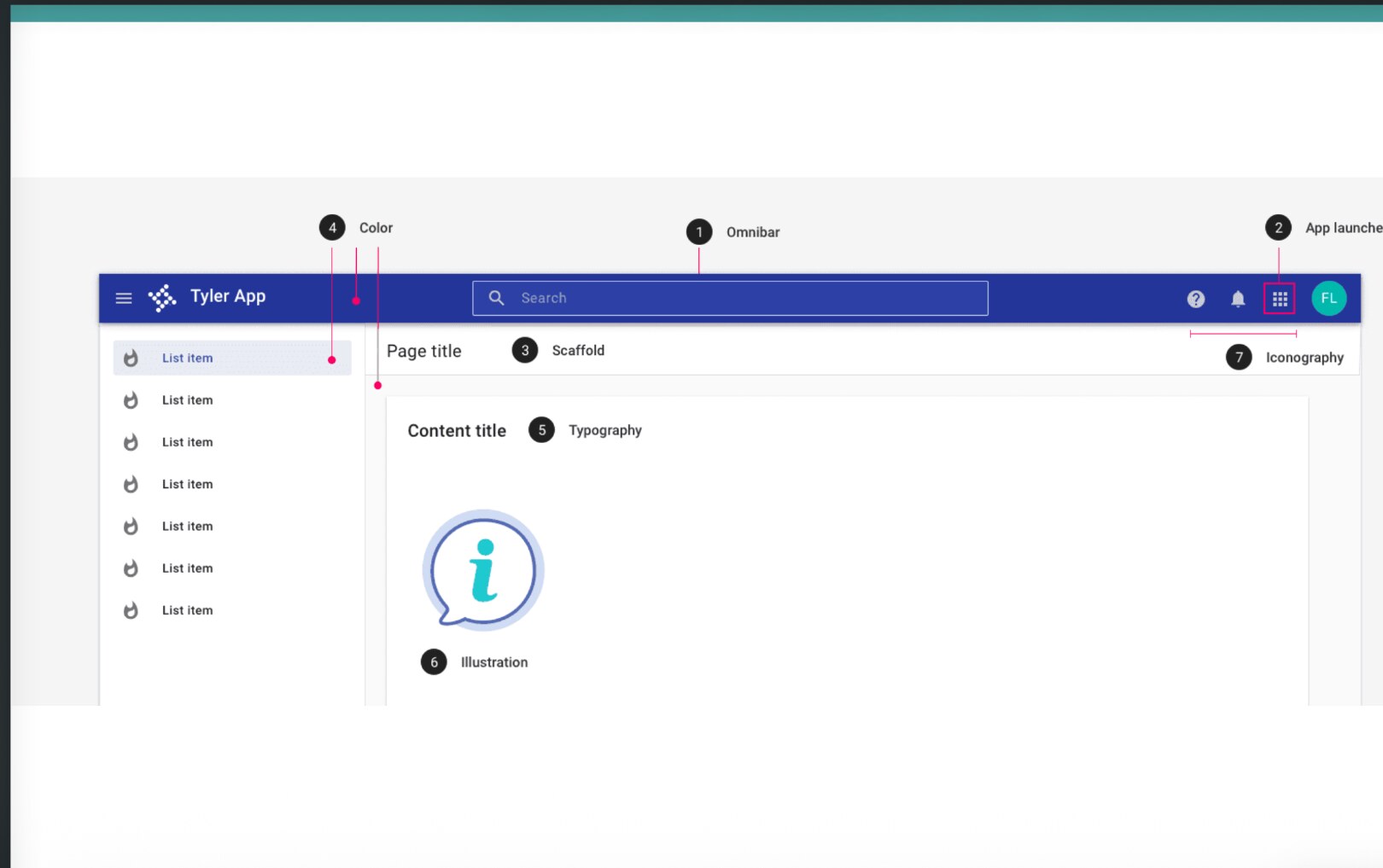
Forge became credible when it stopped asking every product to look identical and started documenting function: what a component is for, how it behaves, when to use it, and how it changes. That challenge is even sharper in AI products, where behavior can be probabilistic and documentation must describe boundaries, confidence, adaptation, and failure—not only static interface states.
FUNCTION DOCUMENTATION / NAME PURPOSE, BEHAVIOR, BOUNDARIES + CHANGE