Work, in context.
Selected projects and the evidence preserved with them.
01 / Course studyDOCUMENTED RECORD
Intro to Human-Centered Design (501B) / 2018
Making Dimensions of Human-Centered Design & Engineering
A framework for locating human-centered work across people, problems, process, and purpose.
Framework developmentFaculty-practice mappingReflective synthesis
Read the study →Reflection & archive notes +
Reflection on record
My work moved from material and brand systems toward applications, then from individual interactions toward collective and institutional systems. Academic research added distributed cognition, actor-network theory, and sociomateriality to an increasingly systems-oriented design practice.
Source context
Course, year, presentation link, and reflection recorded in the portfolio’s research and writing collection.
02 / Course studyDOCUMENTED RECORD
PhD course — title to confirm (548) / 2018
Collaborative Sensemaking in Visual Analytics
PhD coursework with Cecelia Aragon
A literature review examining how groups notice cues, build interpretations, and act through shared analytical systems.
Literature reviewVisual analyticsCollaborative sensemaking
Read the study →Reflection & archive notes +
Reflection on record
The literature concentrated on short, time-sensitive studies with limited group variation. Long-duration sensemaking, diverse and cross-functional teams, uncertainty, trust, and the unconscious work surrounding analysis remained underexplored. These gaps point toward distributed cognition, sociomateriality, calm computing, and better distinctions between data and information as productive directions for future inquiry.
Source context
Course, year, presentation link, and reflection recorded in the portfolio’s research and writing collection. Mathias confirmed this was a PhD class with Cecelia Aragon; he is locating its original title.
03 / Course studyDOCUMENTED RECORD
Seminar: Current Issues in Human Centered Design and Engineering (521) / Winter 2018
Eventual.ly
An early human-in-the-loop machine-learning proposal for event planning. Eventual.ly translated the planning journey—from choosing a direction through managing logistics, communication, and the event itself—into a system where people could accept, reject, and refine recommendations as the plan evolved.
Service journey mappingHuman-in-the-loop concept designData-pattern modelingSystem concepting
Reflection & archive notes +
Reflection on record
The proposal treated machine learning as an adjustable collaborator rather than an autonomous planner: every human correction became another signal for improving the connected set of recommendations.
Source context
The title slide identifies Mathias Burton, HCDE 521, and Winter 2018. The remaining slides document the event-planning journey, human correction loop, recommendation categories, and proposed data patterns. The course title follows UW’s HCDE catalog; the specific seminar topic remains to be confirmed.
04 / Graduate projectDOCUMENTED RECORD
Intro to Human-Centered Design (501B) / Date to confirm
Connectie
Collaborative project
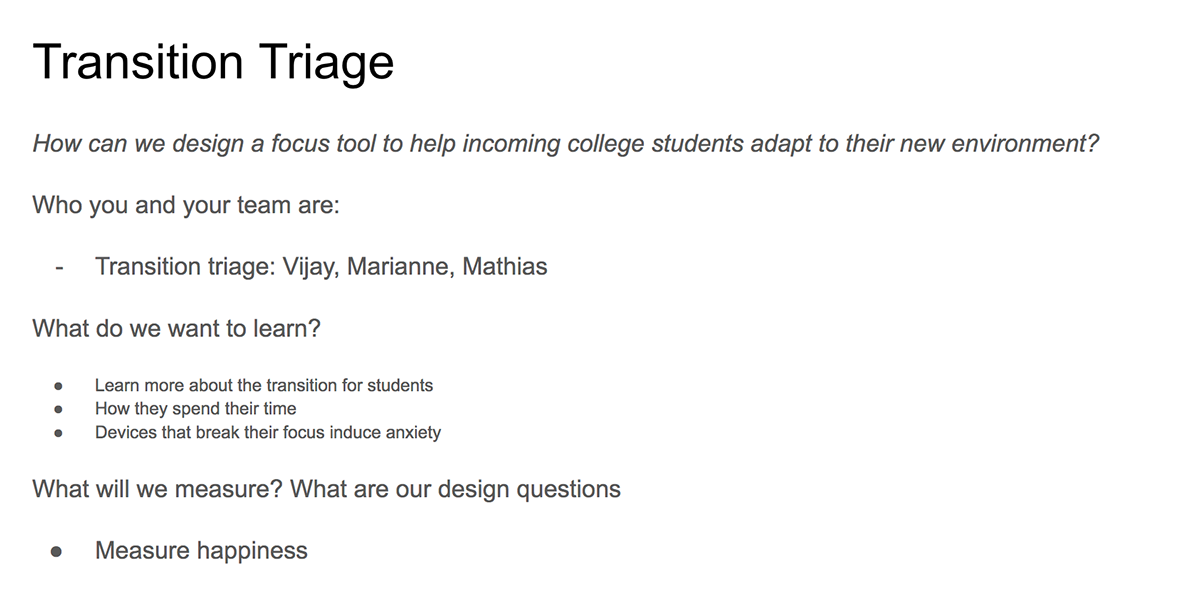
A ten-week project exploring how incoming college students describe stress, recognize their needs, and find appropriate support.
Student interviewsSurveysResearch synthesisConcept evaluation
Read the project →Reflection & archive notes +
Reflection on record
When someone cannot name the service they need, design should begin with the experience they can describe.
Source context
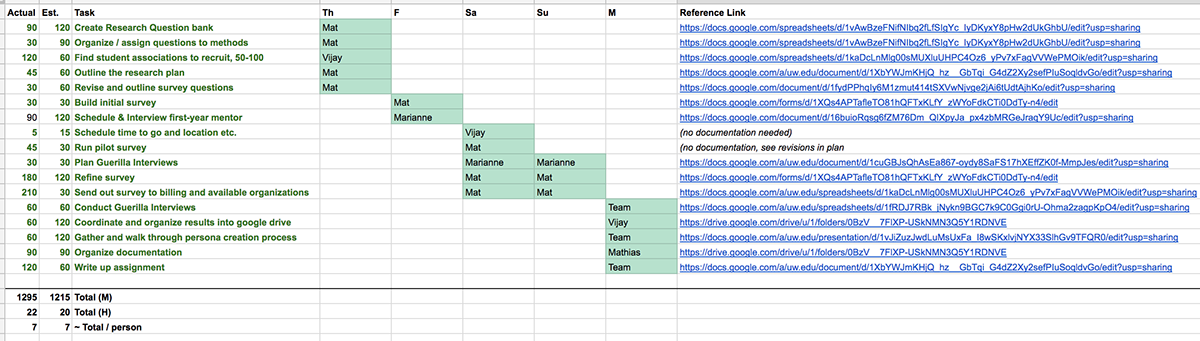
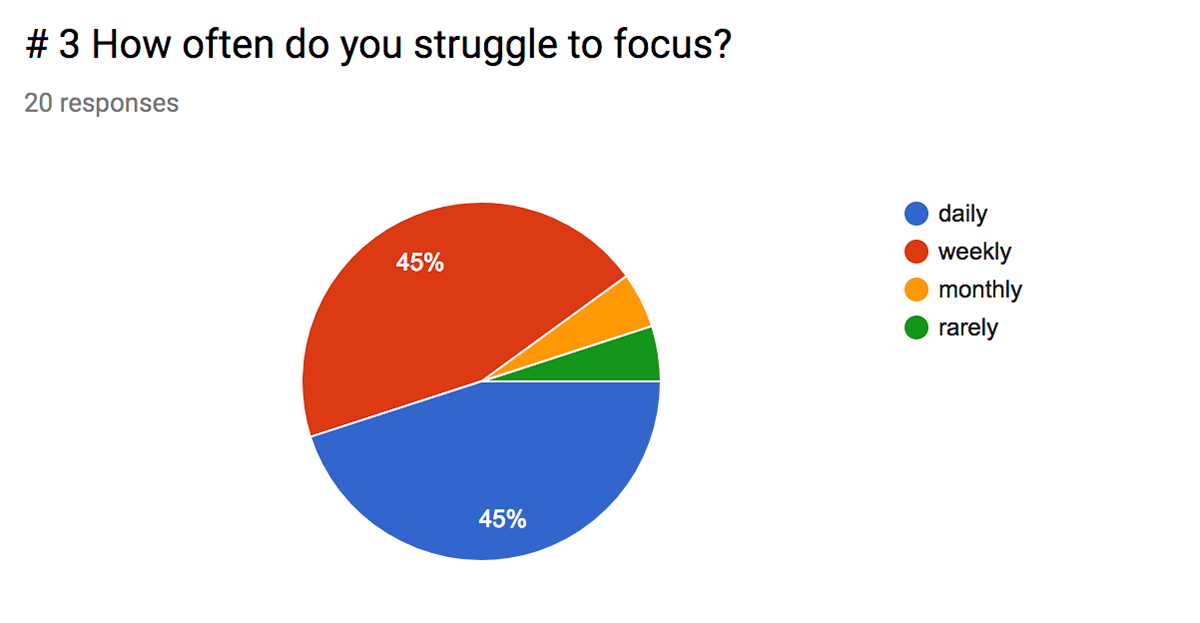
Project narrative and three images retained in the existing Connectie case study; methods also recorded in the work index.
05 / Graduate projectDOCUMENTED RECORD
Course attribution pending / Date to confirm
SDOT parking-map usability
Collaborative project
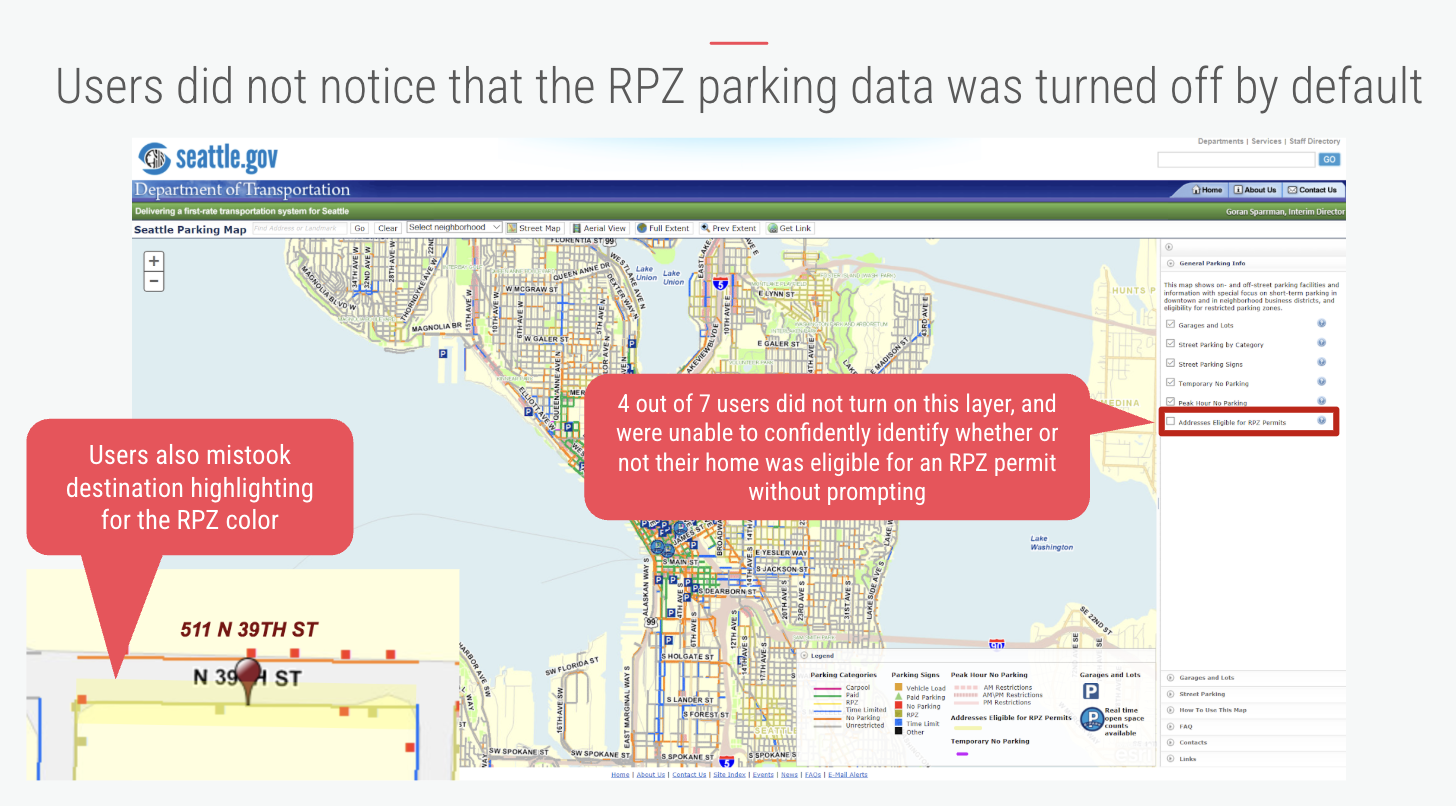
A usability study of Seattle parking maps, examining where public information supported—or interrupted—a driver’s task.
Usability testingTask analysisPublic-information design
Reflection & archive notes +
Reflection on record
This entry records the work represented in the available sources.
Source context
Graduate-research description, methods, and one annotated image retained in the portfolio work index.
06 / Graduate projectDOCUMENTED RECORD
Capstone / 2020
Sensed / Censed: nonvisual navigation
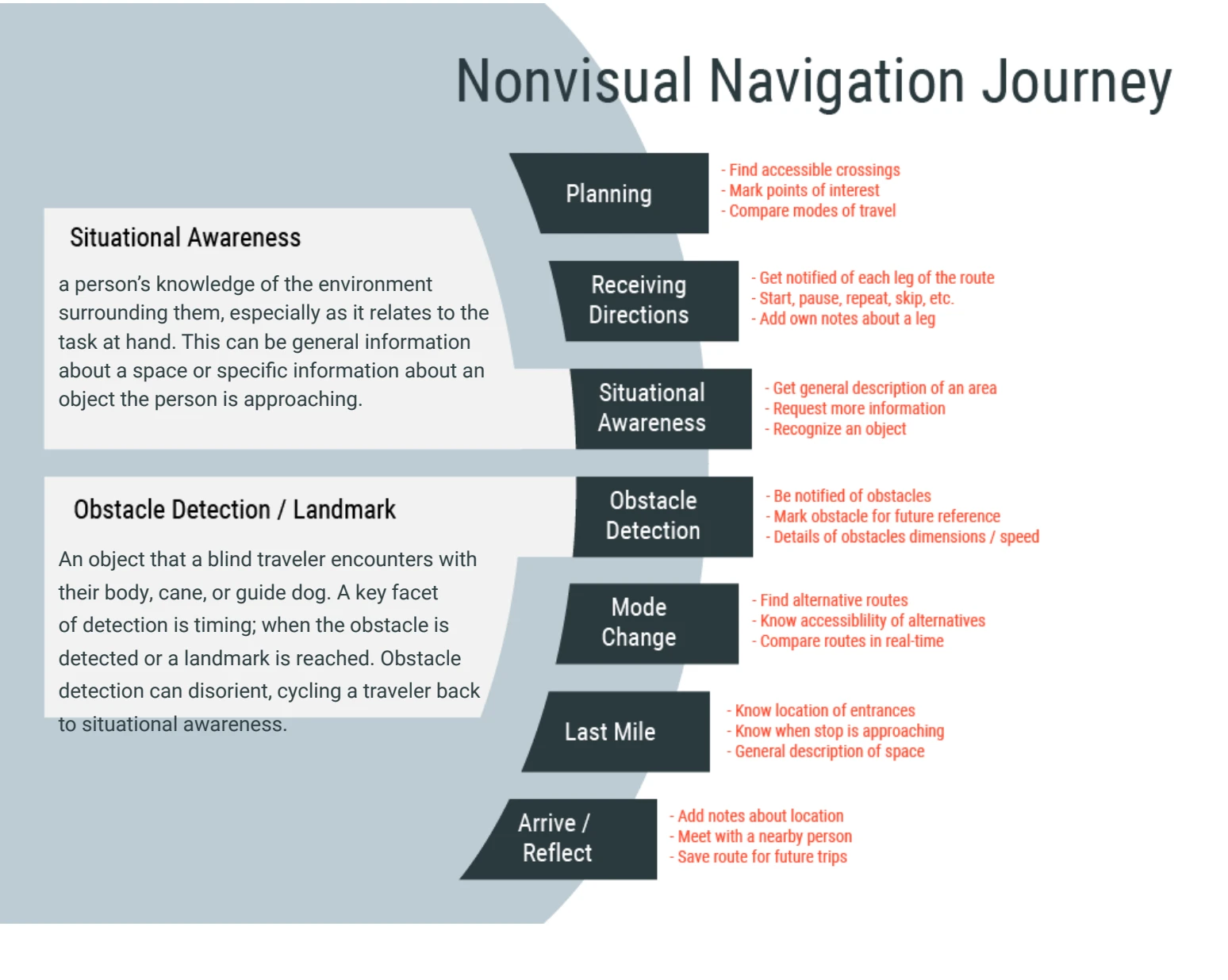
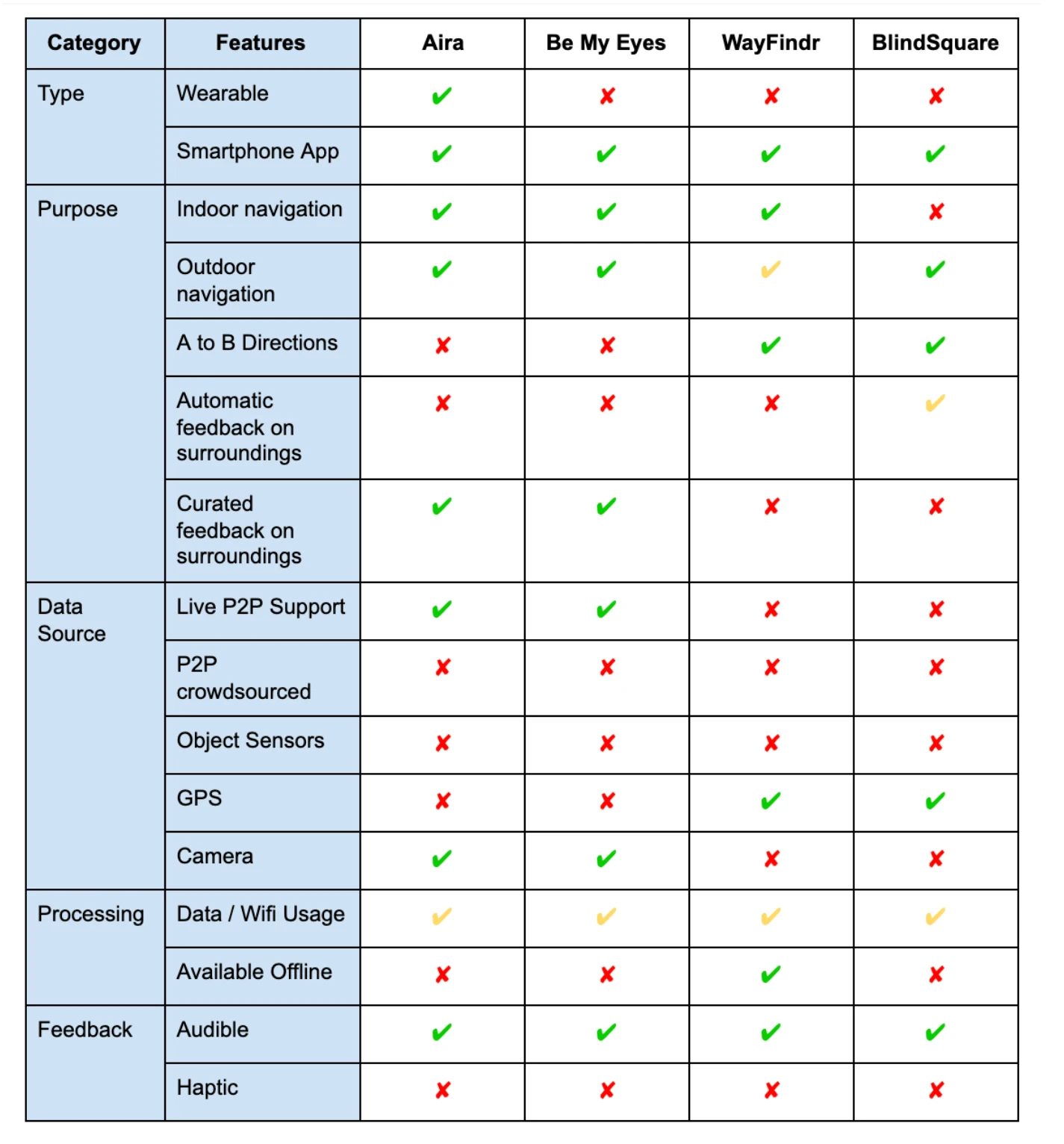
As UX Research Lead on a four-person UW capstone team, I explored how blind and low-vision travelers navigate urban environments. Our March 2020 plan used formative research and journey mapping to focus on situational awareness and obstacle detection, then proposed participatory co-design with audio and haptic prototypes.
Formative interviewsLiterature and market reviewJourney mappingParticipatory design planning
Explore the capstone →Reflection & archive notes +
Reflection on record
The plan positioned travelers as experts and designers as facilitators. The central design challenge was to provide useful environmental information without overwhelming attention or replacing the tools people already trusted. This is an archive synthesis of the planning document; the source document is a plan rather than a completed evaluation.
Source context
Capstone-1a.pdf, issued March 20, 2020, planning through June 12, names the project Sensed and identifies Mathias as UX Research Lead with Cyrus Majd, Caitlin Karpinski, and Molly Olsen. Existing portfolio records use Censed and describe a later pandemic adaptation. The plan documents formative findings and proposed work, not final outcomes. Earlier concept images are retained on the full project page with separate provenance.
07 / Graduate projectPROJECT SUMMARY
Course attribution pending / Date to confirm
Cryptocurrency transactions
Collaborative project
A qualitative group project investigating how and why people make cryptocurrency transactions, and the mental models and expectations of trust shaping those choices.
InterviewsMental modelsBehavioral inquiryQualitative synthesis
PROJECT RECORDThe project is recorded in the portfolio. This entry summarizes the work currently documented.
Reflection & archive notes +
Reflection on record
This entry records the work represented in the available sources.
Source context
Graduate-research description and methods retained in the portfolio work index. No source artifacts are currently attached.
08 / Related presentationDOCUMENTED RECORD
Course attribution pending / 2019
Penny-Wise, Pound-Wise
A response to Susan Dray and David Siegel’s article on cost-effective usability practice, grounded in research experience at RefWorks and Socrata. Its connection to a particular HCDE class remains unconfirmed.
Critical readingResearch planningReflective practice
Read the response →Reflection & archive notes +
Reflection on record
Every study makes tradeoffs. The important question is not whether to compromise an ideal process, but which compromises preserve credible participants, useful evidence, and team involvement.
Source context
Presentation link, year, and argument recorded in the portfolio’s research and writing collection; no course attribution is recorded.
09 / Course studyPROJECT SUMMARY
Designing a Human-Centered Venture (534) / Date to confirm
Human-centered venture
Coursework in developing a human-centered venture. The project brief and artifacts will be added as they are recovered.
PROJECT RECORDThe project is recorded in the portfolio. This entry summarizes the work currently documented.
Reflection & archive notes +
Reflection on record
This entry records the work represented in the available sources.
Source context
Mathias identified this class in his archive review. The course number and formal title are listed in UW’s course descriptions; historical term and project details remain open.