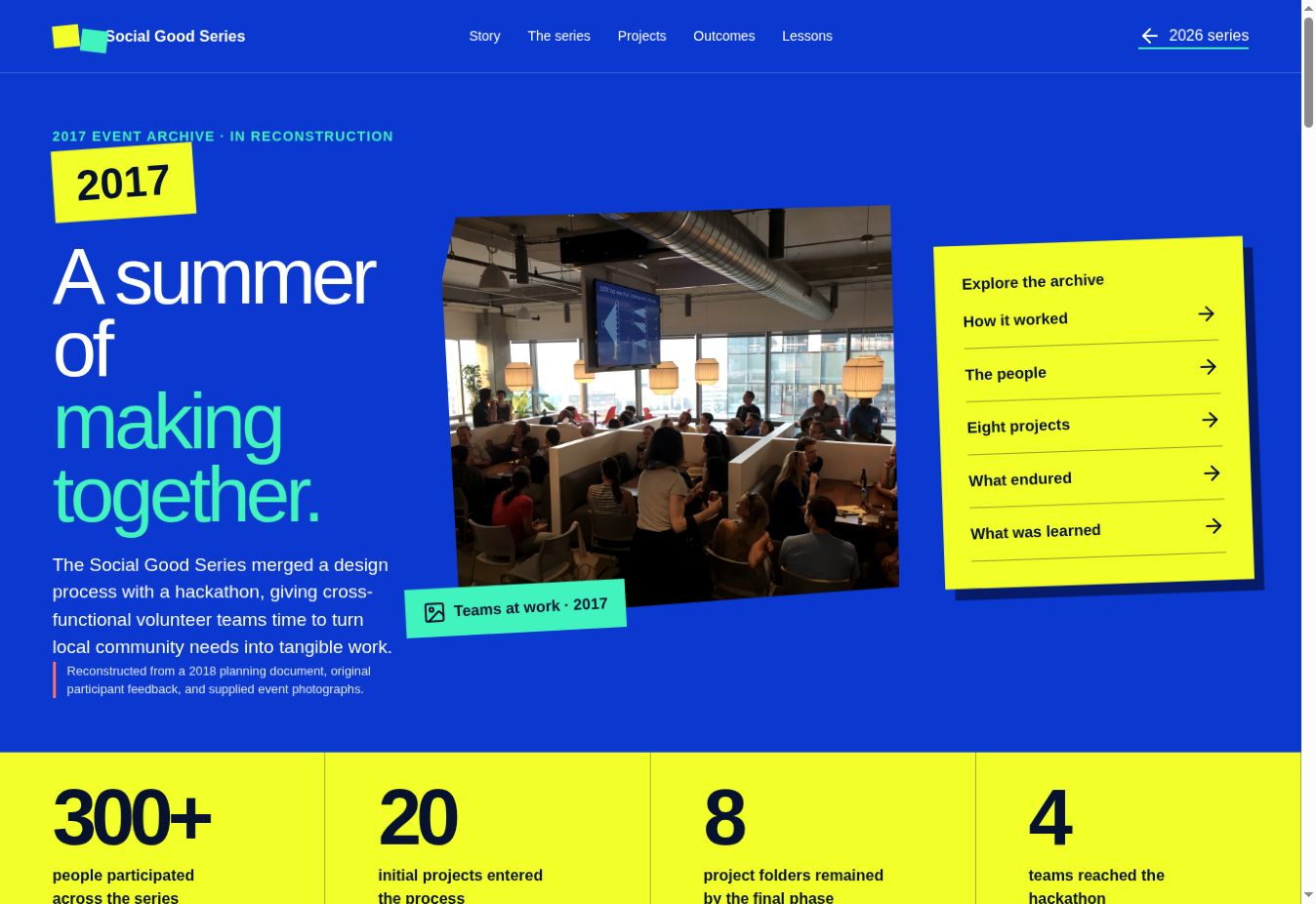
The 2017 series brought together more than 300 people, but the operating knowledge was scattered across event folders, forms, decks, and individual organizers. When the original leadership group dispersed, the program had no clear way to explain what had happened, recruit the next cohort, or carry promising work forward.
buttons
55 / CIVIC INNOVATION PROGRAM
55 / CIVIC INNOVATION PROGRAM
Seattle Social Good Series
A 2017 civic innovation program that combined a design sprint with a hackathon—and the 2018 relaunch plan intended to make its volunteer energy durable beyond a single event.
300+PARTICIPANTS
20STARTING PROJECTS
4HACKATHON FINALISTS
PROGRAM MODEL / 2018 RELAUNCH PLAN
Design the conditions for civic work to continue.
After the 2017 series, I used a five-day design sprint to plan a stronger second run. The recovered document reframed the event as a repeatable operating system linking learning, matching, research, making, evaluation, and longer-term stewardship. The relaunch remained a plan.
- 01CIVIC MIXER
Meet organizations and understand the issues.
- 02PROJECT MATCHING
Connect challenges with skills and volunteer capacity.
- 03RESEARCH + IDEATION
Generate widely, investigate, and choose a direction.
- 04DESIGN + LAUNCH
Make the concept tangible and test the first version.
- 05HACKATHON + FOLLOW-UP
Iterate, present, and create a path beyond the event.
I audited the surviving materials: agendas, logistics, participant records, project folders, evaluation forms, brand work, and unfinished retrospectives. The evidence showed both momentum and fragility. Twenty starting projects narrowed to eight active folders and four hackathon finalists, while incomplete records and only six organization survey responses made long-term learning difficult.
Treat the series as a designed system rather than a sequence of events. The proposed model connected a civic mixer, project matching, research and ideation, design, launch, and follow-up. It defined roles, onboarding, project artifacts, feedback loops, and a 100-day horizon intended to help small multidisciplinary teams produce something testable in the world.
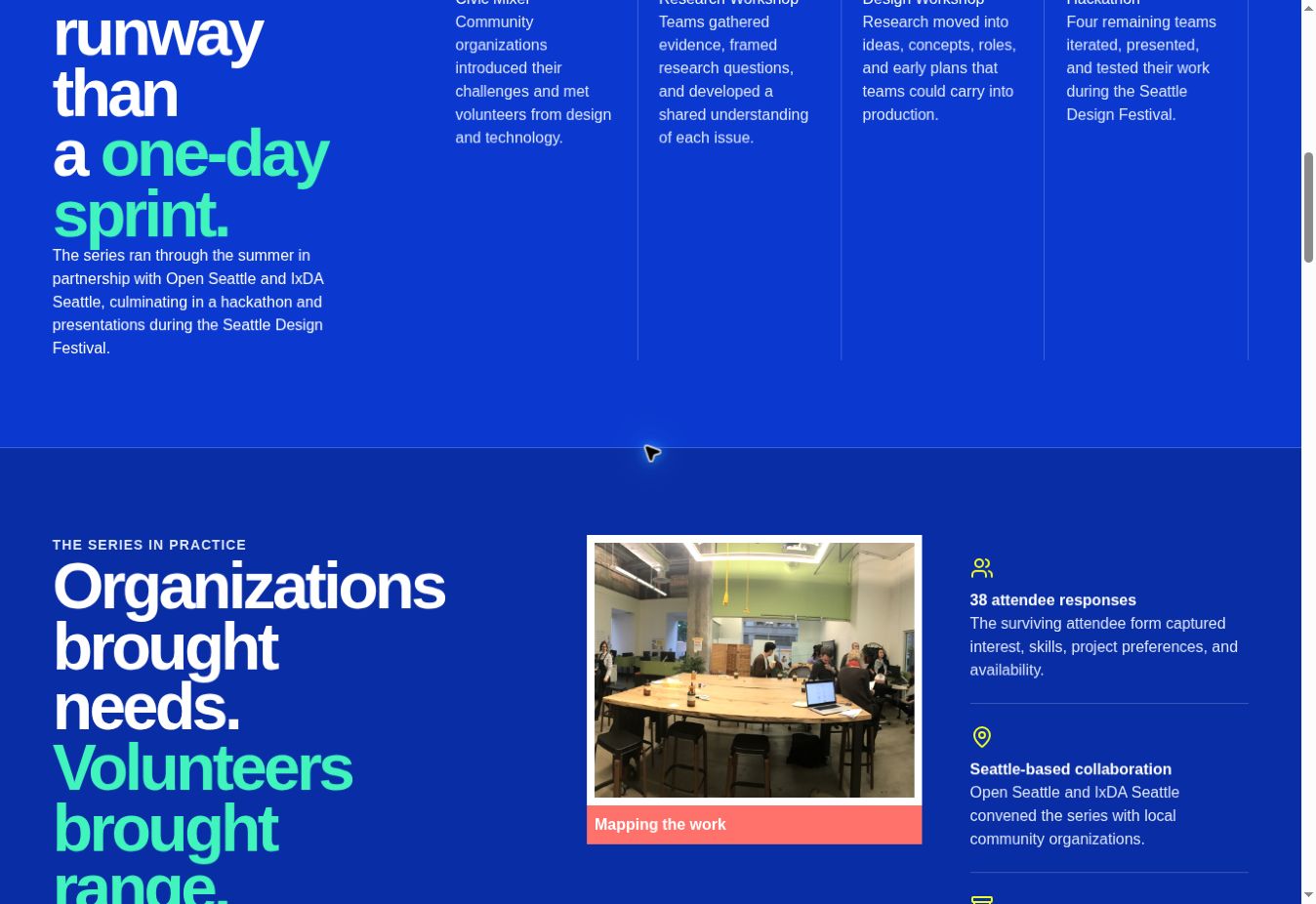
The series was developed with IxDA Seattle, community organizations, facilitators, designers, engineers, recent graduates, and volunteers looking for meaningful ways to contribute. The format paired people who arrived with a social challenge with contributors who brought research, design, technology, and organizing skills.
The 2017 program engaged 300-plus participants and moved 20 proposed projects through a narrowing process to eight working groups and four hackathon projects. The 2018 document captured my plan to run the series again with a more durable operating model in Seattle and Portland. That relaunch was planned, not completed, so the document is evidence of the strategy and retrospective—not a second delivered program.
The series taught me that convening is only the beginning. Social innovation also needs memory, ownership, feedback, onboarding, and a path for a volunteer team to keep moving after the room empties.
PROJECT EVIDENCE