01 / THE PROBLEMPeople cared, but the ballot demanded too much reconstruction.
Down-ballot races, initiatives, judges, and local offices required voters to search across disconnected sources. Some people left choices blank; others spent between 30 minutes and three hours assembling enough context to decide.
02 / THE CONCEPTStart with the voter’s actual ballot.
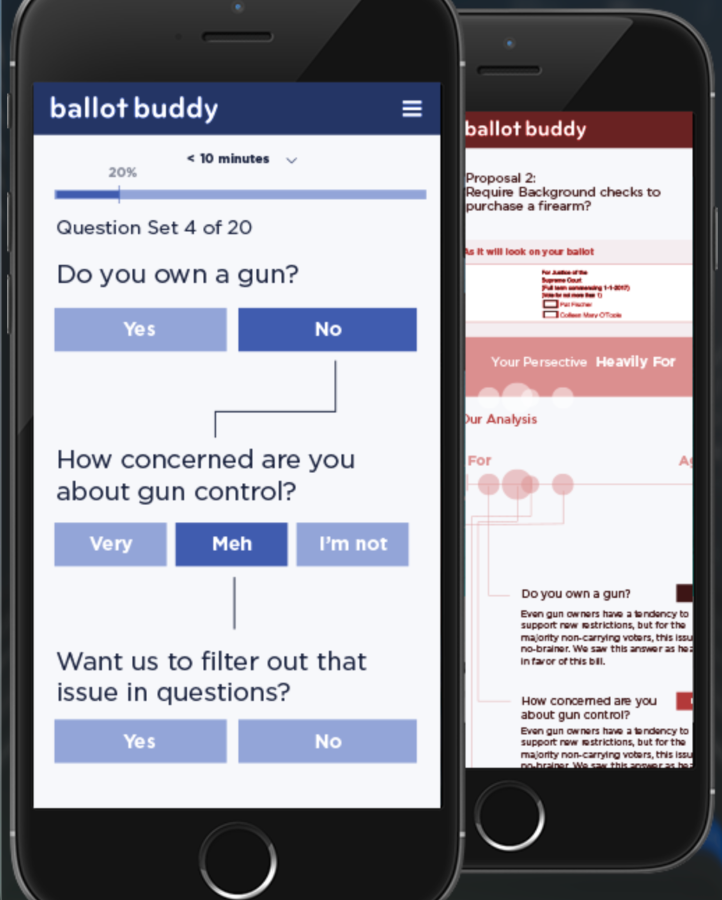
Ballot Buddy connected a person to their precinct, helped them prioritize their interests, and organized competing perspectives around the decisions in front of them. The team’s shorthand was deliberately ambitious: move from three hours of research toward three minutes of useful orientation.
 03 / MY ROLE
User research and design inside a full-stack team.
I led user-research and design work alongside teammates responsible for business, front-end and back-end engineering, machine learning, marketing, sales strategy, and legal concerns. The work connected voter evidence to the product proposition, interaction model, market story, and original pitch.
04 / THE BROADER HYPOTHESISCould constituent learning work in both directions?
The concept extended beyond a voter guide. With explicit opt-in, it imagined connecting voters with legislators and interest groups, then synthesizing responses into more frequent and useful constituent insight. That business hypothesis was early and unvalidated, but it made the civic system surrounding the interface visible.